





The weather is slowly on the turn! The summer sun is giving way to milder temperatures, and it’s looking like it’ll end up being quite a wet start to the autumn already. That means it’s worth taking extra care to keep your decking clean, so you can avoid the risks that come with dampness – not least the risk of slipping. And as experienced timber merchants in Wigan here at Sherman & Young Timber, we have a great track record of helping customers all over the country get the most out of their decking – so here are some of the best ways to keep yours clean and safe this autumn!
Clear leaves and debris from your decking
As you might expect, leaves, twigs, and other natural debris will gather on your decking almost daily. It’s important not to let these build up – that’ll prevent the dampness from settling in, and in turn preventing mould, mildew, and rot. It’s a good idea to sweep your decking regularly with a stiff brush to make sure no wet leaves hang around for too long – especially since they can be the worst culprits for causing slippery conditions.
You can also use a blower or even a garden vacuum if you’d prefer a quicker way to deal with fallen leaves. Pay close attention to corners and edges, where debris often piles up and traps moisture. If you’ve got planters or furniture on your decking, move them around occasionally so you can clear underneath. That way, you can help your boards stay clean and prevent unnecessary damp build-up.
Wash and treat your boards regularly
Once you’ve cleared the surface, the next step is to wash your decking so dirt and algae don’t take hold. You can use a specialist decking cleaner with a stiff brush to scrub the boards, which lifts dirt out of the grooves and gives the timber a fresher look. If you prefer, a pressure washer can also do the job, but make sure you keep the pressure low enough so you don’t damage the wood fibres. It’s really important to wash away grime at this time of year, as it stops mould and algae from appearing quickly.
After cleaning, it’s always best to treat your decking with an oil or stain that’s designed for timber boards. This helps protect it against moisture and reduces the chance of slippery growths forming when the weather stays wet. An autumn treatment prepares the wood for the harsher winter conditions ahead, ensuring that the boards stay in good shape. Make sure you allow enough drying time before applying any oil or stain – you don’t want to seal in moisture, as this can trap problems under the surface.
Add anti-slip measures to prevent accidents
As we’ve touched on above, autumn rain and fallen leaves make decking notoriously slick. To keep your space safe, you can add anti-slip strips, mats, or even special coatings designed for timber decking. They’re good for giving you extra grip underfoot, which is especially useful if children or older family members are using the space. The goal is to prevent slips before they happen, and autumn is when accidents are most likely if the boards stay wet for long periods.
You might also consider mixing sand into decking paint or using anti-slip decking oil. These products work by creating a textured surface that resists the usual slickness caused by moisture and algae. Another straightforward way to keep traffic safe is to install rubber mats at key access points, such as doors leading out onto the decking. Anti-slip measures can make your decking a lot safer to walk on during autumn, especially when rain and fallen leaves increase the risk of slipping.
Check for damage to keep your decking safe
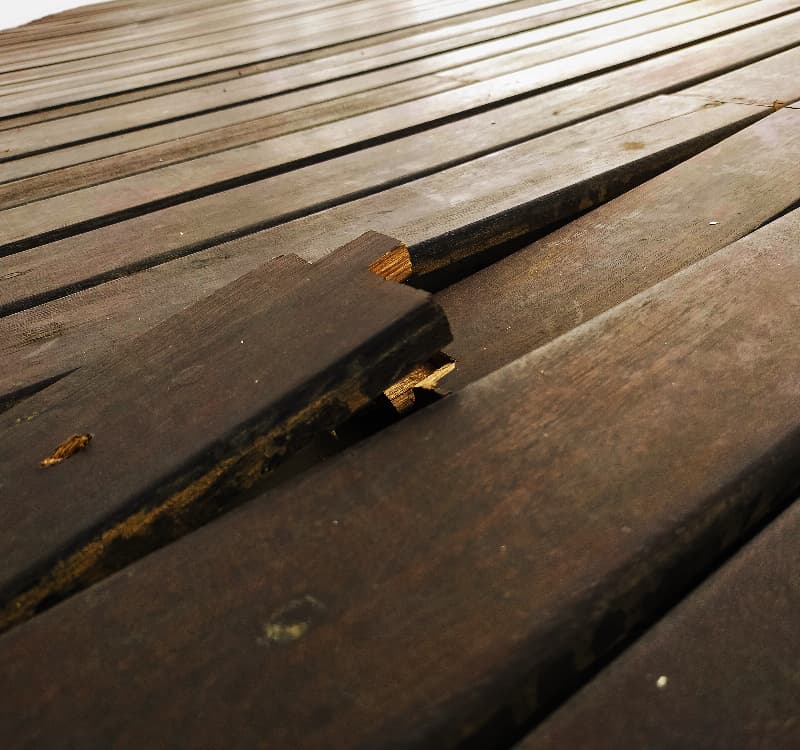
Autumn is a good time to look closely at your decking for any signs of wear or damage. Loose boards, protruding nails, or weakened fixings can all turn into real hazards. It often helps to take the time to walk across the whole structure, testing each section for movement and checking railings or steps for sturdiness. Any repairs you handle now can help to prevent larger issues from developing in the winter when weather conditions can often make jobs more awkward.
You’ll also want to look out for splintering wood, cracks, or signs of rot, particularly in areas where water tends to sit. If you find small issues early, you can usually sort them with a little filler, sanding, or replacement of fixings. Boards that have suffered more serious damage might need replacing altogether.
Those are just a few of our top tips – you may well be able to think of plenty of your own! At Sherman & Young Timber, we’re a Wigan-based, family-owned business with over 50 years of experience supplying timber across the North West. From DIY jobs to large builds, our knowledgeable team is here to help you choose the right products for the job. If you have any questions, please don’t hesitate to give us a call on 01942 727 314, email us on websales@shermanyoung.co.uk, or browse our full range of decking online today!