





Whether you use it for entertaining, outdoor dining, or simply enjoying a bit of fresh air, timber decking is a great addition to any garden. With winter on the way, though, you might be wondering how best to look after it as the weather turns colder and wetter – and we’re here to help!
At Sherman & Young Timber, we’ve spent over 50 years supplying first-class timber and building materials to homeowners and trade customers across the North West. As a family-owned business, we pride ourselves on offering a wide range of products alongside friendly, knowledgeable advice to help you get your project right.
Here’s what you need to know about preparing and covering your deck for winter.
Do you need to cover decking in winter?
At this time of year, we speak to a lot of homeowners wondering how to protect their decking, with one common idea being to cover the boards entirely. While you can cover your decking over winter, it’s not something we’d generally recommend.
The thing to bear in mind is that covering your decking can sometimes cause more problems than it solves. If moisture gets trapped beneath a waterproof cover, the boards may stay damp for longer, as there’s less opportunity for them to dry out properly. Over time, this can encourage algae and mould to grow and may damage the timber. For this reason, we’d suggest leaving your timber decking uncovered over winter. If you do decide to use a cover, make sure it’s suitable for outdoor use and won’t trap moisture against the boards.
How to protect your decking without covering it
Getting your decking ready for winter starts before the boards are even laid, with the type of timber you choose playing an important role. At Sherman & Young Timber, our timber decking boards are pressure-treated to UC3 classification, helping protect them against fungal decay in outdoor conditions. While this treatment doesn’t make the boards waterproof or maintenance-free, it’s a useful first step towards helping them cope with the British weather. From there, a little routine care can help keep them in good condition through the colder months.
Keep leaves and debris under control
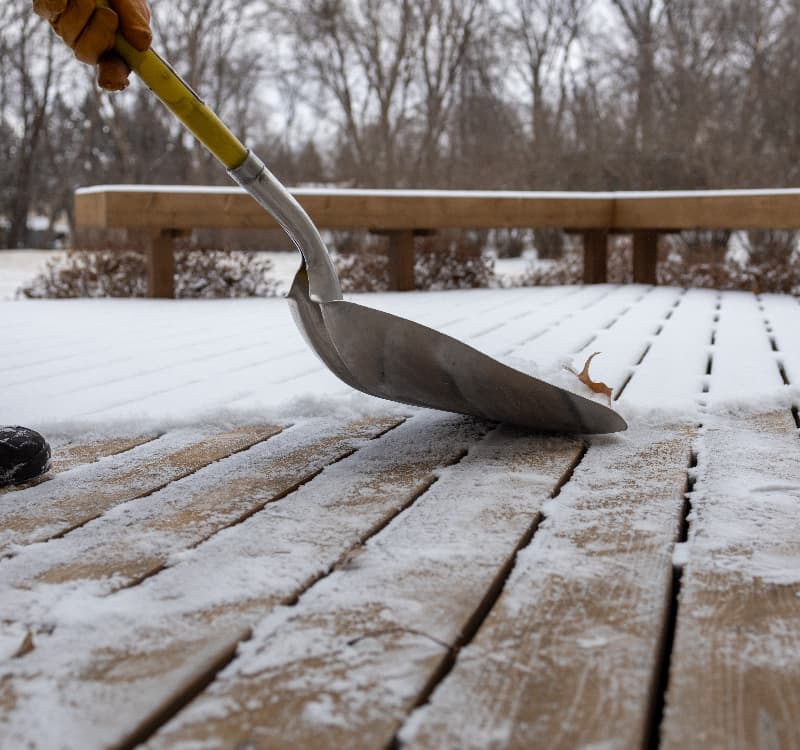
Wet leaves, mud and other garden debris can quickly build up on decking during autumn and winter, which is one of the biggest reasons you may be tempted to cover your deck. As well as making the surface slippery, damp debris can hold moisture against the timber, while dirt and leaves caught between the boards can block the gaps that help rainwater drain away.
Try to sweep your decking about once a week during the wetter months, or more often if lots of leaves tend to collect in your garden. Use a suitable outdoor brush to clear the surface, then gently remove any stubborn debris between the boards with a plastic scraper or narrow, blunt tool. Take care not to force anything into the gaps or damage the edges of the timber.
Give your decking a little extra protection
If you’re leaving your decking uncovered over winter, applying a suitable decking oil or protective treatment is another way to look after the timber, helping maintain its appearance and improve its resistance to moisture.
Pressure-treated decking already has a head start when it comes to resisting fungal decay, but it’s still worth checking how your boards are holding up before winter arrives. Look for areas where the existing finish has worn away, faded patches or boards that look dry and weathered. If the timber has been treated before, check whether the finish is still in good condition and whether it needs refreshing. You won’t necessarily need to apply a new coat every year, so let the condition of the decking guide you.
If your boards do need attention, try to tackle the job in autumn, before the weather becomes consistently cold and wet. Give the decking a thorough clean first, removing any leaves, dirt and algae, and allow it to dry completely. Choose a mild, dry spell with no rain forecast during application and drying, and follow the product instructions carefully. It’s also important to check that your chosen treatment is suitable for your type of timber and compatible with any existing finish.
Move furniture and check for damage
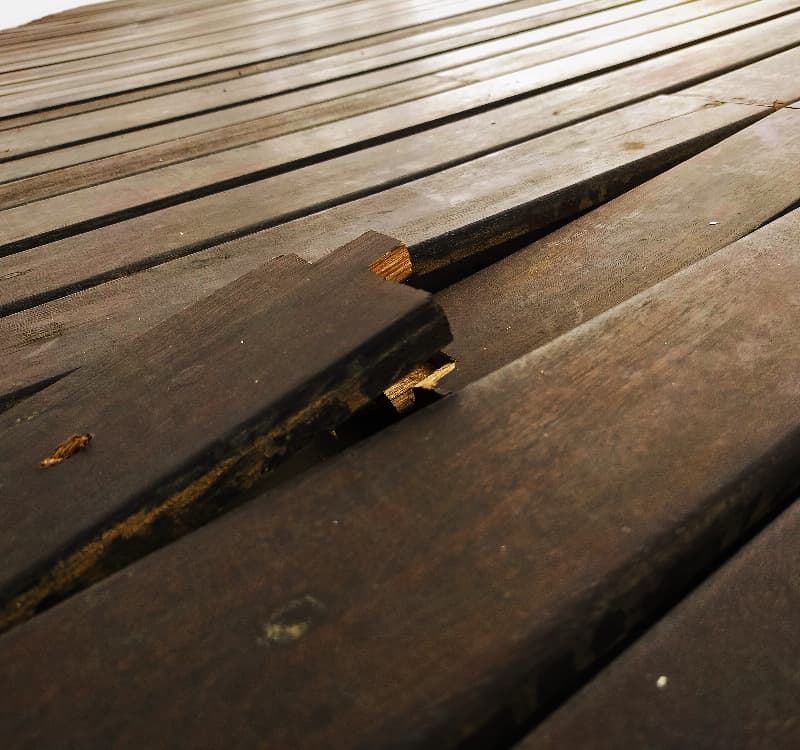
One benefit of leaving your timber decking uncovered over winter is that you can keep an eye on its condition. A cover can hide potential problems from view, meaning you might not spot them until you remove it in spring. Checking your decking regularly makes it easier to spot signs of wear or damage and deal with any issues before they become more serious.
Before winter sets in, take a few minutes to inspect the boards for loose fixings, raised screws or splintering – if your decking is raised, you can also check on the supporting structure, too. At the same time, it’s worth thinking about what’s sitting on the decking. Garden furniture, storage boxes and large plant pots can hide damp patches, fallen leaves and signs of damage beneath them. If you won’t be using these items much over winter, move them somewhere sheltered. If they need to stay on the deck, reposition them occasionally and clear away any debris underneath.
Considering alternatives to traditional timber decking
Timber decking is a great choice if you love the natural look of wood, and with the right care, it can last for years. But if you’re worried about covering your deck or keeping up with maintenance through winter, there are other alternatives worth considering.
Kebony Clear
Kebony Clear is a great decking option for anyone who loves the look of timber but wants less maintenance to worry about over winter. It’s made from sustainably sourced softwood that’s modified at a cellular level using a bio-based liquid. This process increases the timber’s hardness and durability, giving it qualities comparable to premium hardwoods.
The modification also improves the timber’s stability, reducing swelling and shrinkage by around 40–60%, while providing high resistance to fungi, rot and decay. It doesn’t need additional protective treatments, either, with normal cleaning all that’s required to keep it in good condition. That means you can leave it uncovered over winter, and save time and effort on applying protective treatments to the boards.
Composite decking
Another option is composite decking, which takes away many of the worries that come with looking after traditional timber through winter. Take the Ecoscape Grande composite decking, for example. There’s no need for staining or painting – instead, its capped technology helps protect the boards, while UV resistance helps them retain their appearance when the sunshine finally returns. Grande also features an anti-slip design, which is worth considering when looking at how to stop decking being slippery in winter. Simply sweep away fallen leaves and give the boards a clean when needed.
So, if you’ve been wondering whether covering decking is a good idea in winter, we’ve hopefully given you a few things to consider. Thinking about upgrading your decking altogether? At Sherman & Young Timber, we’ve been helping homeowners and trade customers find the right supplies for over 50 years, from timber decking to composite decking and much more. As a family-run business, we’re proud to offer a great choice of products, value for money and friendly, knowledgeable advice to help you find the right fit for your garden. Explore our range, or give our team a call on 01942 727 314 for advice today.